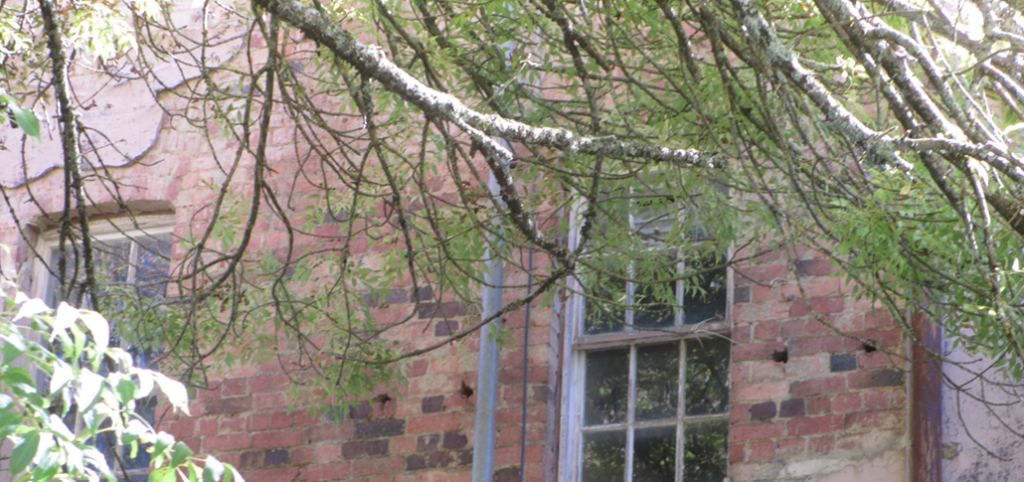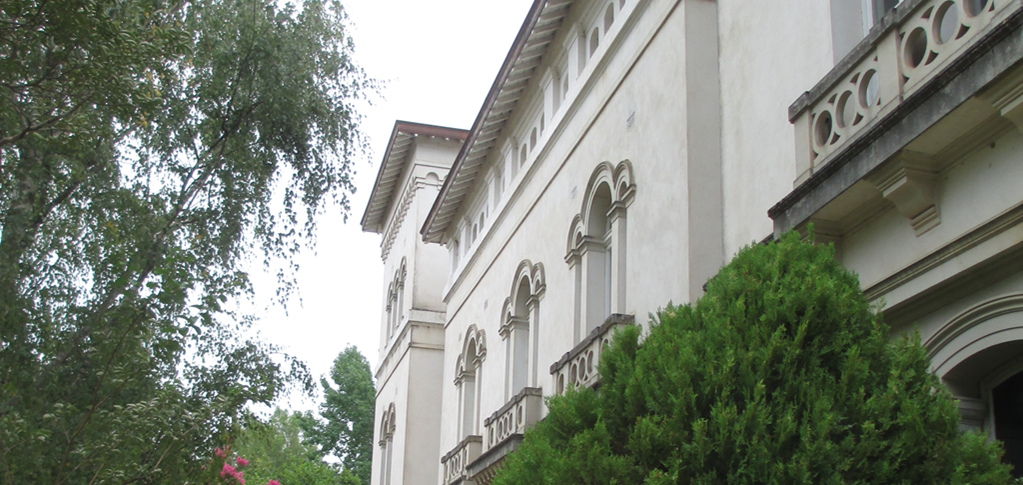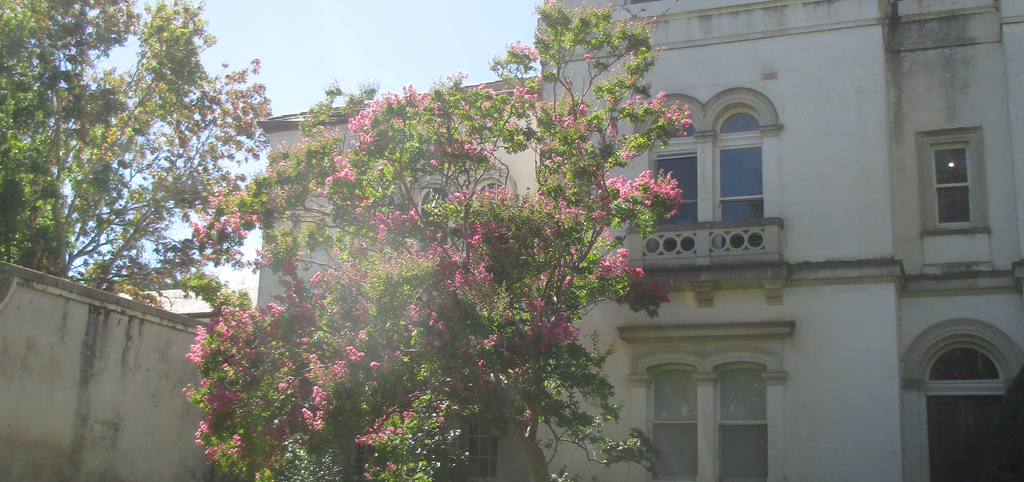
The main aim of Jenni’s presentation was to show how technology is enabling the collection of memories and artefacts from the medical history of the former mental hospital, Mayday Hills. As visitors to this site know, when you access https://maydayhills.org.au/ you can take a virtual tour of both the Beechworth Cemetery, where you can get close in to 3-dimensional ways of being in the cemetery. As you move through the site, you can get close to some returned soldiers’ graves who died at Mayday Hills – their stories or histories are accessible when you visit those locations in the tour. Likewise, you can move around the exterior of Mayday Hills, and we have some stories from two former employees of Mayday Hills. The intention is to enrich both these sites with more embedded artefacts and narratives in the future. One of the initial purposes was that there is no specific or dedicated museum devoted to Mayday Hills.
Many instances of medical history disappear when the building or institution is demolished or repurposed. The Administration building at Mayday Hills does still exist; however, it has been completely repurposed. Other buildings on the site of Mayday Hills have become artists’ studios and shop; local council; hotel accommodation; ghost & history tours; a bar/café; a children’s centre; and private residences. The same can be said about some of the buildings on the Callan Park site in Sydney: https://www.callanpark.com/
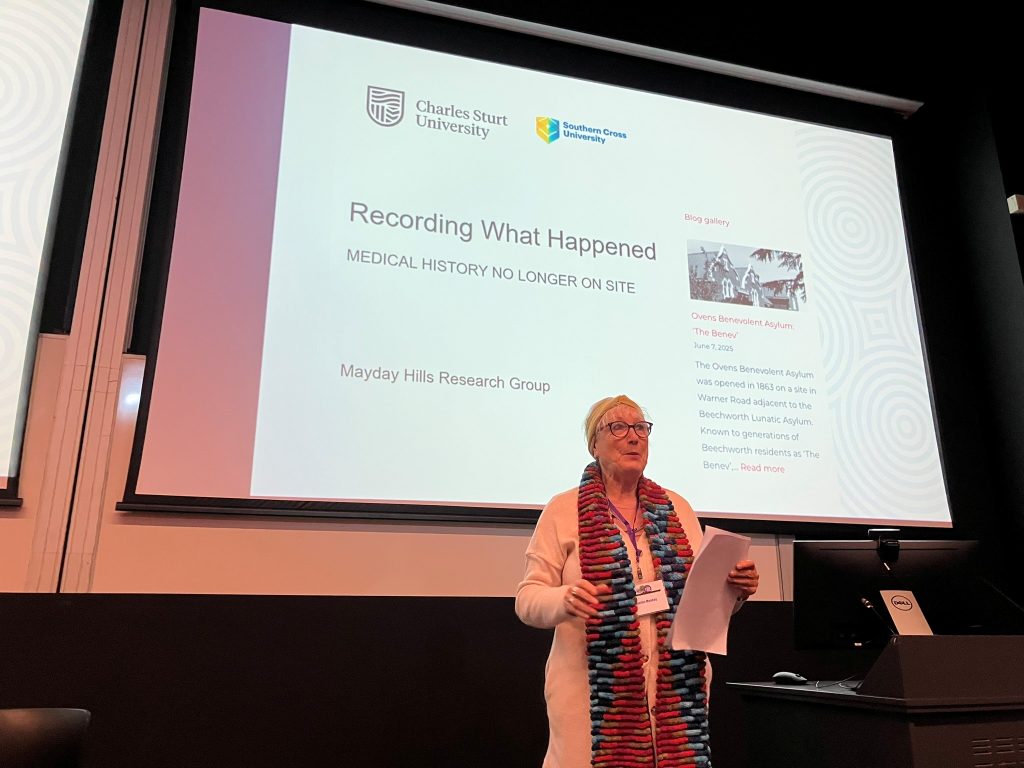
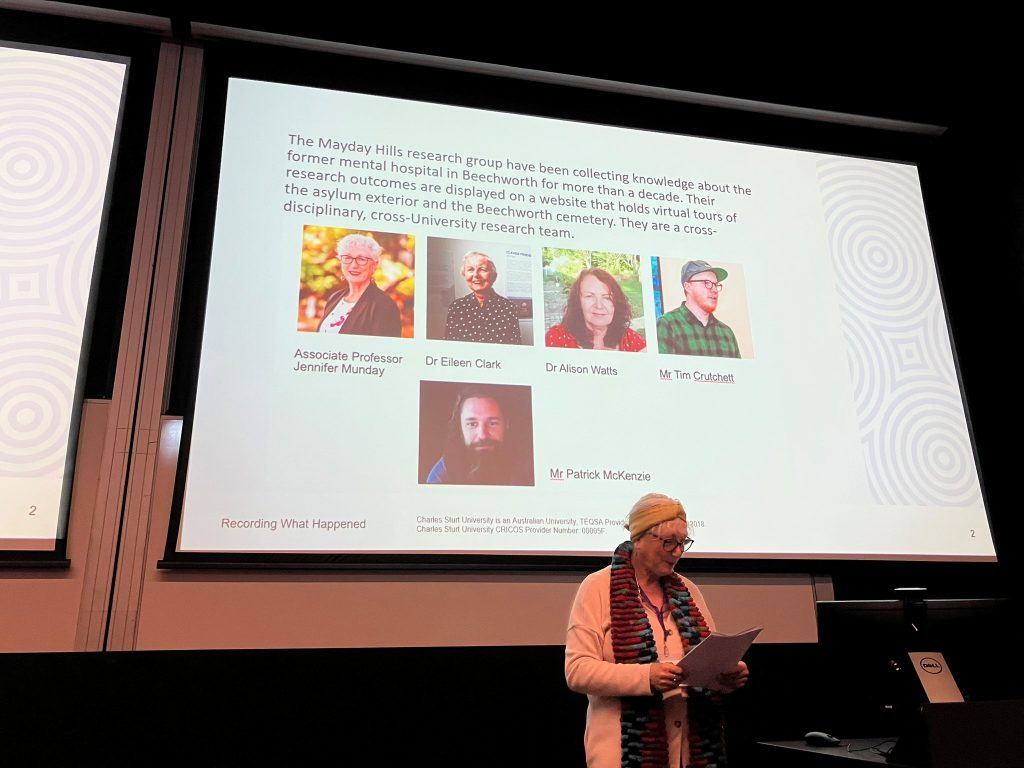
Jenni Munday presented on behalf of the Mayday Hills Research Group: Recording What Happened: Medical History No Longer On Site at the Australian and New Zealand Society of the History of Medicine Biennial Conference 2025 at the University of Sydney, 8-11 July 2025
View and Download the Conference Program: ANZSHM Conference 2025
Explore the Beechworth Cemetery Virtual Tour
Explore the Mayday Hills (formerly the Beechworth Asylum) Virtual Tour