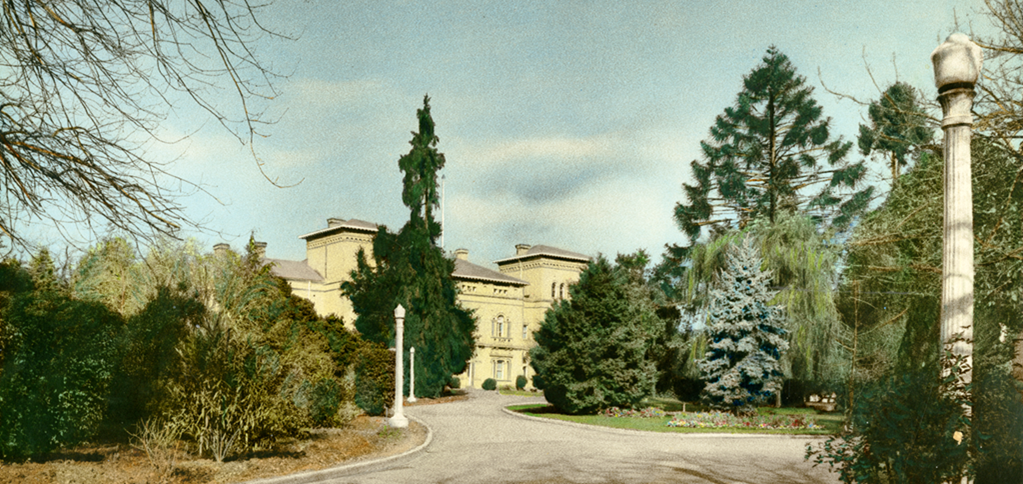
Visitors to Mayday Hills always comment on the magnificent grounds surrounding the buildings. With a mix of exotic deciduous trees, striking natives and an array of flowering shrubs like rhododendrons, the gardens provide colour and shade in every season.
Development of the grounds was a priority from the time the asylum opened in 1867. Space was set aside for a farm and vegetable gardens, but ornamental gardens were also considered important to provide a relaxing environment for staff, patients and visitors. By 1878, about 31 acres had been developed with trees, lawns, shrubberies, flower beds and footpaths. The Head Warder was responsible for the management of the ornamental gardens, with patients doing the day-to-day manual labour, which was considered to be therapeutic for them.
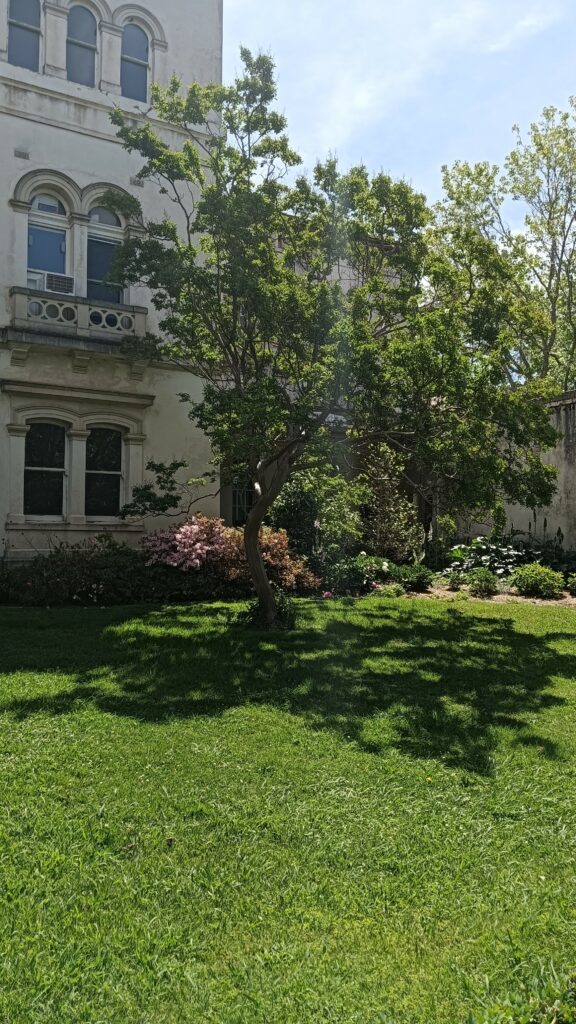
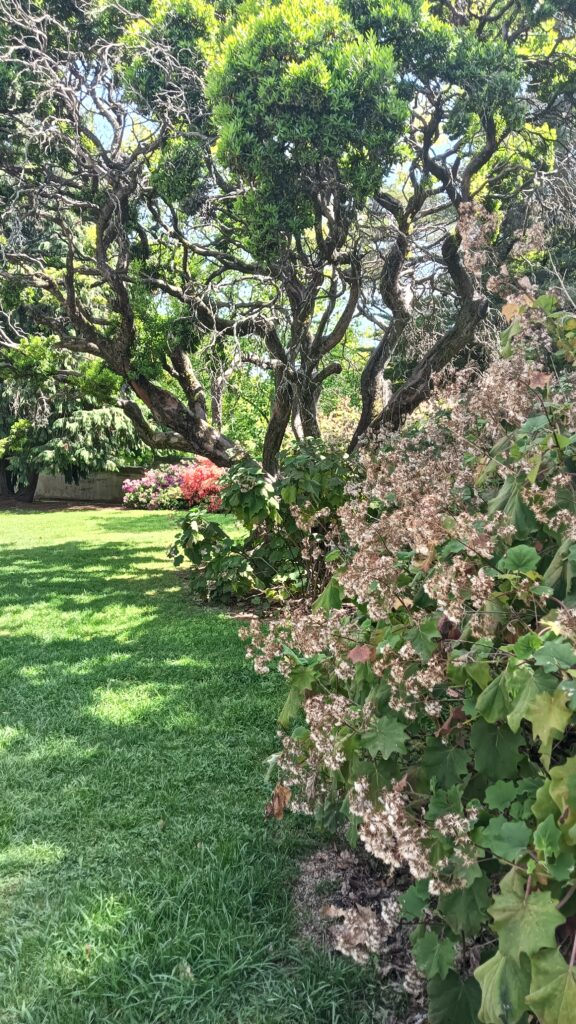
Robert Coates undertook the original design and construction of the grounds. A landscape designer and gardener by trade, he was a patient in the asylum, transferred there among the first group of patients admitted from Yarra Bend asylum in 1867. He remained at Beechworth for five years and organised the purchase of a wide variety of imported and exotic trees including Bunya pine, Douglas firs, cedars and redwoods from the Royal Botanic Gardens in Melbourne. Some of these trees can still be seen today. An asylum nursery was also established to provide seedlings for subsequent plantings.
The two urns, placed on both sides of the pathway to the Administration building entrance, were purchased in 1891 by Medical Superintendent Dr. Deshon for £3 and have been on display there ever since.
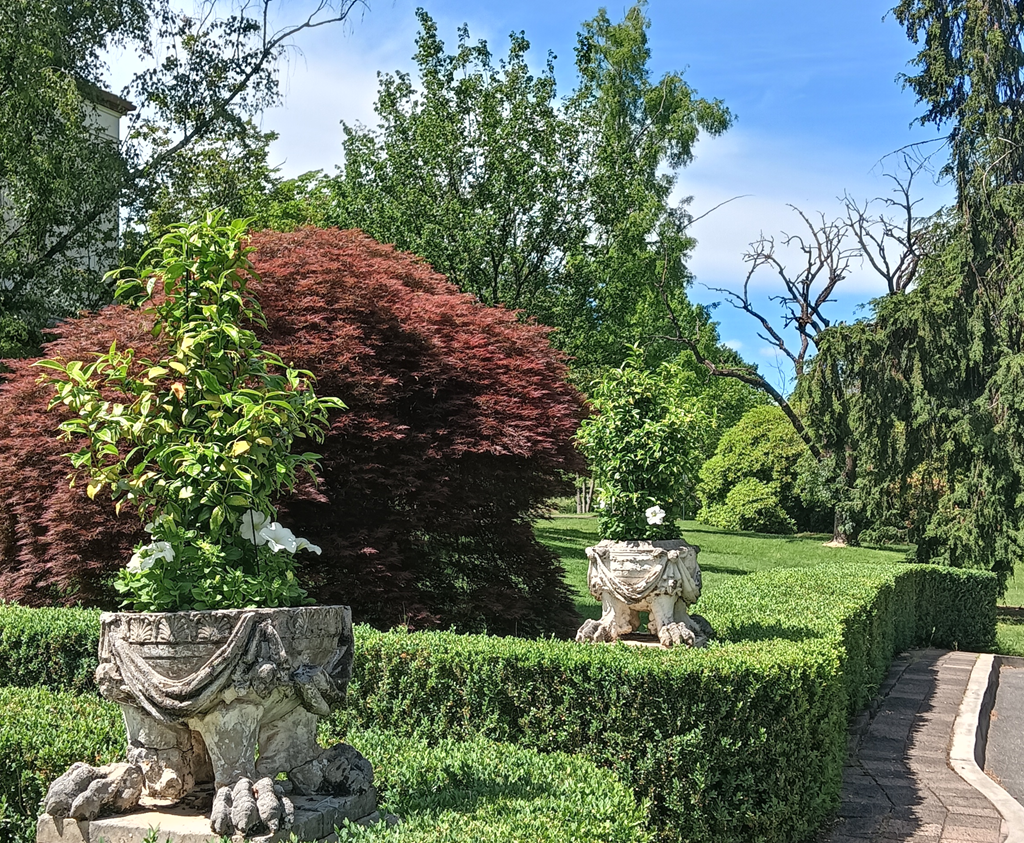
entrance purchased in 1891
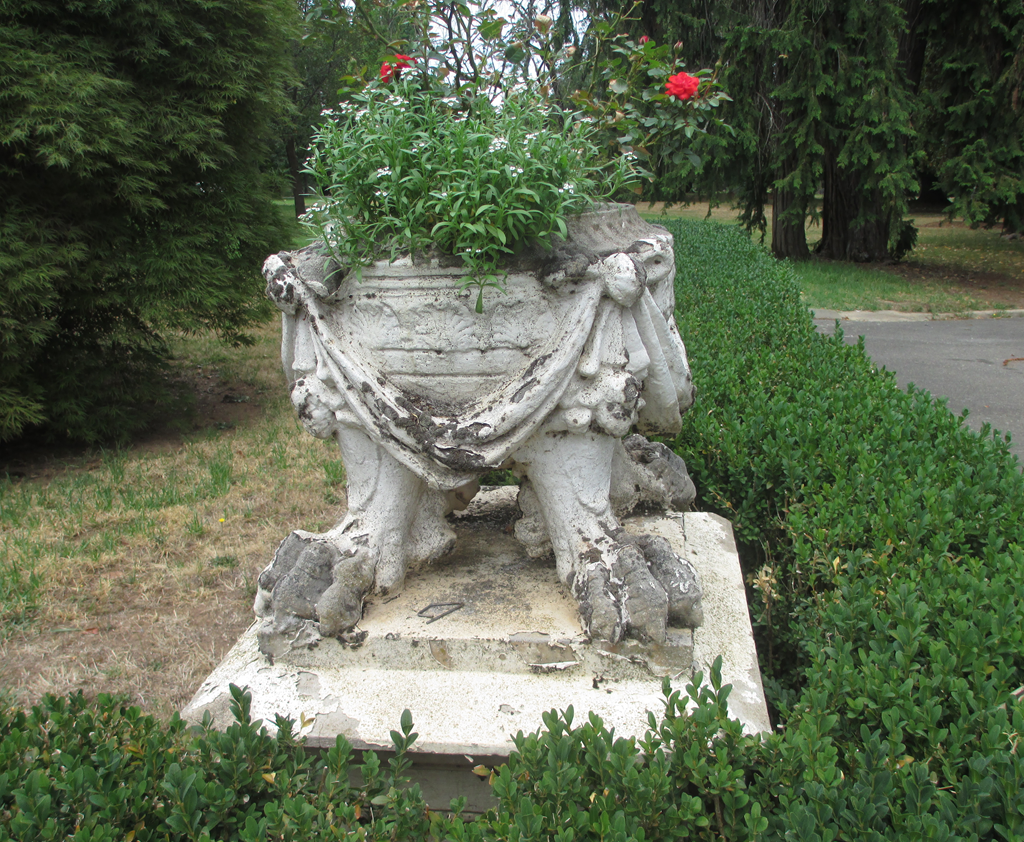

courtesy of Karen(nee Donnan)

A significant redevelopment of the gardens began in 1912 when Hugh Linaker, the Lunacy Department’s Landscape Gardening Advisor, was called upon to review the ornamental gardens and implement further plantings to enhance the setting. He was responsible for the magnificent stands of oaks and plane trees along the main avenues around the asylum. The significance of Linaker’s work was recognised when, in the late 1990s, the former nurses’ hostel was converted into a magnificent hotel and named Linaker.
In 1940, a new Medical Superintendent, Dr Farren Ridge was appointed. He had previously been a forester and took a keen interest in the gardens, arranging for the planting of many rhododendrons around the main building and what is now the Grand Oaks Resort, previously the Medical Superintendent’s Home
By the 1950s the Hospital Secretary had assumed responsibility for the management of the gardens and two gardeners were employed as reliance on patient labour decreased. In the mid-1980s, the Secretary, Douglas Craig, realised that mental health care was changing and that large asylums like Mayday Hills could be phased out. He believed that it was important to maintain and enhance the gardens as a way of safeguarding the site when the hospital closed down. Thanks to his vision, the grounds remain an outstanding feature of Beechworth today.
The Mayday Hills site is classified by the National Trust of Australia (Victoria) and is listed on the Victorian Heritage Register and the Register of the National Estate. The citation includes the following:
Mayday Hills Hospital is aesthetically important for the beauty of its picturesque setting on a prominent hill among extensive parklands made up of native and introduced trees and shrubs. The curved drive with its avenue of large oaks is particularly noteworthy.
The grounds are open at all times. Indigo Shire Council and the Beechworth Treescape Group have designed a series of self-guided walks describing the magnificent and unusual trees. An information leaflet is available Beechworth-Treescapes.pdf
Sources:
Craig, D. A. (n.d.) The Lion of Beechworth. An account of the history of the Mayday Hills Hospital Beechworth 1867–1995.
Lovell Chen Architects and Heritage Consultants. (2012) Former Mayday Hills Hospital Conservation Management Plan Review. East Melbourne, VIC: Author Publisher
Written by Dr Eileen Clark, Adjunct Research Fellow at Charles Sturt University.
See Eileen’s full bio here
Explore the Beechworth Cemetery Virtual Tour
Explore the Mayday Hills (formerly the Beechworth Asylum) Virtual Tour


